


You know the feeling. It's 8:05 on a Monday morning, the phone is already ringing, two techs are waiting on parts status updates, and somewhere on your desk is a sticky note with a customer callback from Friday that you haven't gotten to yet. You're running a real business — a good one — and you know that at some point, the way you're managing it has to catch up with how fast it's growing.
So, you Google "appliance repair business software." And then you spend the next two hours more confused than when you started.
The market for field service software has never had more options. New platforms launch every year, each one promising to transform your operation. The feature lists are long. The demo videos look polished. The pricing pages are harder to decode than a warranty claim form. And underneath all of it is a deceptively simple question: what kind of software decision are you actually making here?
In most cases, shop owners are facing one of three paths: buy an off-the-shelf platform, invest in building something custom, or keep evaluating until the decision makes itself. Let's walk through all three honestly — including where each one fails.
Off-the-shelf software: the right call for most shops — but not all platforms are equal

Purpose-built field service software is, for the overwhelming majority of appliance repair businesses, the correct starting point. These platforms are designed around the kind of work you do every day: scheduling service calls, dispatching techs, tracking job history, managing parts, and getting invoices out the door. You're not adapting generic small-business software to fit your world — someone has already done that work for you.
The genuine advantages are real. You can be up and running in days rather than months. There's no development risk, no project manager to manage, and no technical debt to inherit. The vendor handles maintenance, security updates, and bug fixes. And because these platforms have been shaped by feedback from real service companies, the workflows tend to reflect how shops actually operate — not how someone imagined they might.
The trade-offs are equally real, and worth naming plainly. Per-technician pricing models can get expensive fast, especially as you grow. You adapt your processes to fit the software's logic, not always the other way around. And if you ever want to leave, questions about data ownership and portability become very real very quickly.
There's also a question that doesn't come up often enough in software evaluations: who built this, and how long have they been doing it? A platform that looks modern and well-designed may have been built by an excellent software team that learned appliance repair workflows from market research. That's not nothing — but it's not the same as twenty years of real-world feedback from real shops telling you what breaks, what works, and what they'll never give up.
When you're evaluating platforms, the pedigree matters as much as the feature list.
Building your own: why it almost always backfires

Every few years, a shop owner gets far enough down the road of software frustration that building something custom starts to sound appealing. Total control. Exact fit. No monthly fees. A system that works precisely the way your business works.
It's an understandable impulse. And for almost every appliance repair business, it's the wrong call.
The financial reality alone should give pause. A usable custom software product — not a finished one, just a usable one — typically runs well into six figures before you see a single technician benefit from it. Scope creep is nearly universal in custom development projects; what seemed straightforward in the planning phase becomes complicated in the building phase and expensive in every phase after that. Timelines stretch. Budgets expand. And when it's finally done, you've become your own IT department, responsible for maintenance, security patches, and updates for as long as the software exists.
What often gets missed in this conversation is something less quantifiable: the workflows that make field service software genuinely useful took years of real-world experience to get right. The edge cases, the exception handling, the way a parts delay ripples through a job record — these aren't things you can design correctly in a conference room. They're things you learn from running a service company, or from serving thousands of them over a long period of time.
Building from scratch means starting that learning process over, at considerable expense, when platforms already exist that have done it for you.
The narrow exception: very large, multi-location operations with workflows so specific and so unusual that no vendor can serve them. For everyone else — and that's nearly every appliance repair shop in the country — custom development costs far more than it saves, in time, money, and operational risk.
What twenty years in the room actually buys you
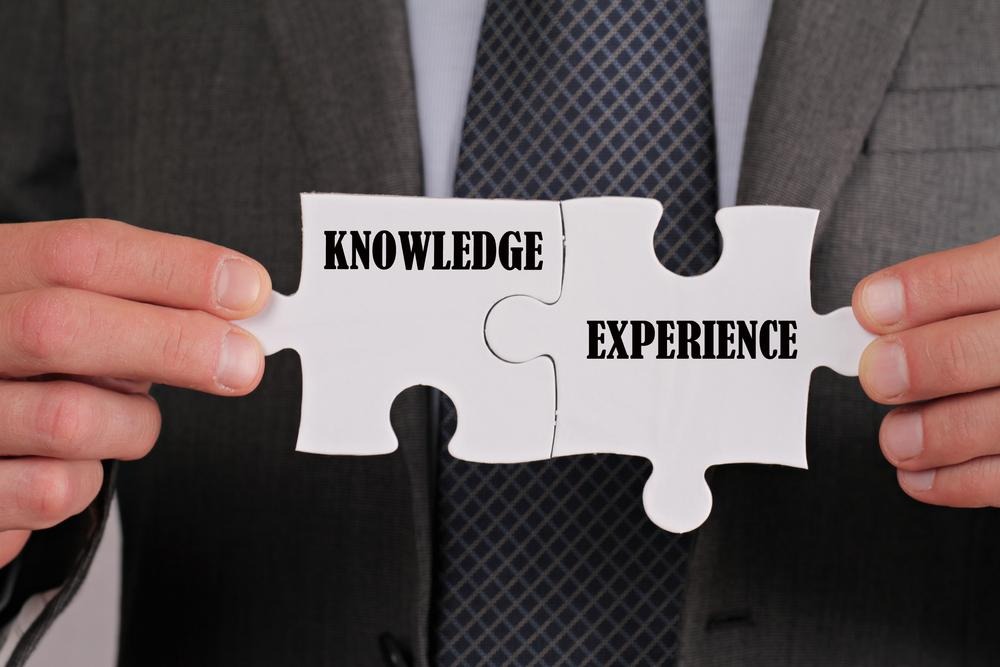
Here's a dynamic worth paying attention to: the field service software market has attracted a lot of new entrants in recent years. Some of them are well-funded, well-designed, and genuinely capable. And many of them were built by people who are excellent at building software — but who came to the appliance repair industry from the outside.
That gap shows up in subtle ways. Workflows that almost fit. Features built for the demo rather than for daily use. Edge cases the system doesn't handle gracefully because no one on the development team had ever actually dealt with them. There's no malice in any of this — it's simply what happens when smart people build software for an industry they're still learning.
The alternative is a platform that didn't come to the appliance repair industry — it came from it.
Rossware's ServiceDesk was born directly out of a working appliance repair shop. Founder Glade Ross wasn't a software developer who identified a market opportunity. He was a service company owner — running Aardvark Appliance Service in San Juan Capistrano, California — who built a tool to solve his own operational problems. When it worked, he realized the entire industry had the same problems. He sold his repair business and devoted himself to making ServiceDesk available to shops everywhere.
What followed was nearly two decades of development driven by a specific and demanding audience: actual service company owners telling him, in real time, what they needed. Every edge case that got addressed, every workflow that got refined, every feature that got added — it came from the field. That accumulated knowledge doesn't live in a document somewhere. It's baked into how the software thinks.
That kind of institutional knowledge is genuinely difficult to replicate. You can hire talented developers and build a capable product in a few years. You cannot shortcut two decades of learning what repair shops actually need.
Connected to the ecosystem you already work inside
One of the practical tests for any business software is whether it fits into the world your business already operates in — or whether it creates a separate island you have to manage alongside everything else.
For appliance repair shops that do warranty work, that world includes dispatch platforms like ServiceBench, ServicePower, and DispatchMe, along with home warranty companies like American Home Shield that route jobs through those systems. ServiceDesk connects directly to all of them. When a dispatch comes in through ServiceBench or ServicePower, it lands in ServiceDesk automatically — no manual re-entry, no parallel system to monitor. That's not a small thing when you're managing a full schedule and a phone that won't stop ringing.
On the parts side, ServiceDesk has direct ordering connections with major distributors including Marcone, Encompass, and local distributors like V&V, as well as integration with MyPartsHelp for cross-vendor parts availability. It's not a deep operational pipeline — but it's enough to eliminate the time-consuming back-and-forth of jumping between systems to get a part on order for a waiting job.
These connections exist because ServiceDesk has been embedded in this industry long enough to build them — and long enough to maintain them as the ecosystem around them has changed.
What to actually look for when you're evaluating platforms

If you're in the process of choosing software for your shop — or reconsidering what you're currently using — here are the criteria worth weighing most heavily:
Purpose-built for field service repair. Not adapted from a generic service industry template, not a horizontal platform stretched to fit. Software that was designed, from the ground up, around the specific workflows of a shop that sends technicians to customers' homes.
A real track record in the industry. Years in market, a documented customer base, a history of iteration based on feedback from actual shop owners. Ask how long the platform has been serving appliance repair businesses specifically — and who was in the room when it was being built.
Workflows that reflect how your business operates. The best way to evaluate this is to put the software in front of whoever runs your dispatch and your parts process and watch how quickly it makes sense to them. If it requires significant mental translation to map to your daily reality, that's a signal.
Transparent, predictable pricing. Understand exactly what you'll pay as your team grows. Some platforms price in ways that work well at four technicians and become painful at ten.
A vendor who is actively investing in the platform. The software you choose today is a relationship, not just a purchase. Look for evidence that the company is still building — releasing updates, responding to customer feedback, staying current with the industry around them.
ServiceDesk checks each of these boxes. It was built by a repair shop owner, refined over nearly two decades by thousands of active users, and continues to be actively developed by the team at Rossware. It serves shops from single-technician operations up to companies running around sixty trucks — which means it scales with you rather than becoming a ceiling.
The bottom line
In a market with no shortage of options, the loudest voices tend to belong to the newest entrants. That's not a reason to dismiss them — but it is a reason to ask the question that often gets skipped: how long has this platform been learning what your business needs?
For most appliance repair shops, the right move isn't to build something custom, and it isn't to chase the newest platform on the market. It's to find a platform that already understands your industry deeply, connects to the systems you depend on, and has a vendor committed to being there for the long haul.
The best software for your shop isn't the one with the longest feature list. It's the one that already knows what your Monday morning looks like.
Want to see ServiceDesk in action? Book a demo with the Rossware team and find out why thousands of service companies have trusted it to run their business for nearly two decades.

